Powered By Blogger
Showing posts with label James Garner. Show all posts

Monday, April 11, 2022

MAVERICK Mondays: "Escape to Tampico" (1958)


MAVERICK Mondays: Number 32 


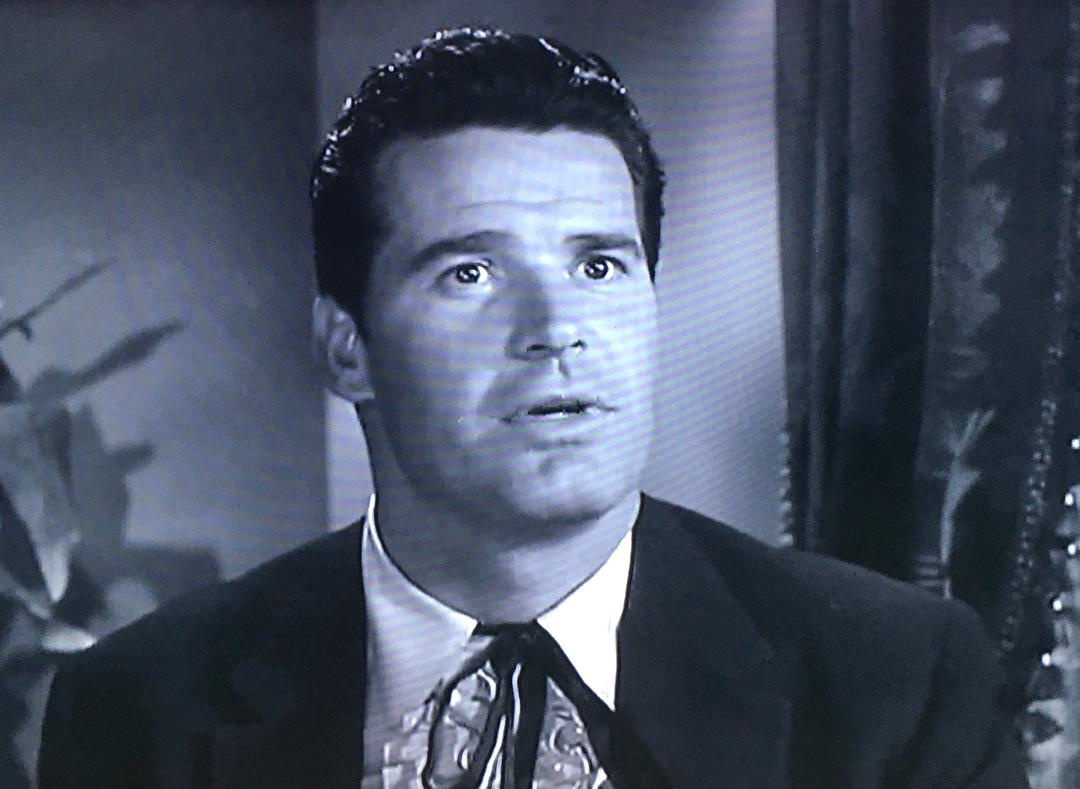
MAVERICK: "Escape to Tampico" (Warner Brothers/ABC-TV 1958) Starring James Garner as Bret Maverick, Gerald Mohr as Steve Corbett, Barbara Lang as Amy Lawrence, John Hubbard as Paul Brooks, Paul Picerni as Rene Gireaux, Tony Romano as Chicuelo, Louis Mercier as Raul Gireaux, Ralph Faulkner as Ziegler, William D. Gordon as Sam Garth, Nacho Galindo as Carlos.  Written and Directed by Douglas Heyes.

A lengthy case of runbad on a riverboat trip to New Orleans leaves Bret Maverick flat busted and open to an intriguing business proposition from Rene Gireaux, who offers a $1,000 advance, to be quintupled later.  Gireaux needs an American citizen, of "exquisite tastes, but bankrupt" to bring Steve Corbett, murderer of his son, to justice.  No, not at gunpoint: Bret's task is to merely persuade Corbett back to U.S. soil from Tampico, where he runs a casino.


The opportunity to replace his full bankroll and then some sends broke Bret across the Gulf of Mexico to La Cantina Americana in the titular city.  After finding employment in the genial Corbett's establishment, Bret also finds himself believing the expatriate's claim of innocence and nullifies the agreement with Gireaux.  Maverick's expertise assists Corbett in weeding out cardsharps and disloyal employees who are cheating the proprietor, and grateful Corbett rewards the gambler with a fair share of the savings.  When sultry singer Amy Lawrence entices Corbett to follow her to Corpus Christi, Bret is left in charge--but also smells a trap, leaving Maverick with a difficult decision.  Should he stay or should he go?


Gifted writer-director Douglas Heyes wrote a MAVERICK styled noir for each lead during the second season: Prey of the Cat for Jack Kelly and Escape to Tampico for Garner.  The former is far grimmer but surprisingly the more successful of the two.  Part of the problem is the setup: while Bart is the femme fatale's victim in Cat, giving us a much higher emotional investment in the proceedings, Bret is essentially a spectator in his installment which really highlights a cynical Gerald Mohr in a role that plays off the actor's resemblance to Humphrey Bogart.


Visually, Escape to Tampico looks like Heyes' version of a MAVERICK CASABLANCA, even using the same sets as that 1942 classic.  Steve Corbett operates a nightclub/casino, wears a white suit, refuses to ever drink with the customers and can't return to his homeland.   Sounds familiar--but that last problem really points towards this episode's larger inspiration: ALGIERS.  In the 1938 American version, Charles Boyer's Pepe Le Moko (title of the original French film) is a wanted man elsewhere turned pillar of the local community.  His Achilles heels? Longing for both the France he can't return to and the visiting femme fatale who reminds him of it.  (Mohr fits only the second qualification for most of Escape to Tampico--more on that below.)


Heyes doesn't entirely do away with humor in Escape to Tampico: Bret pulls a humorous con to get the casino job originally refused him and has a ready quip for each crooked patron he dismisses from La Cantina Americain.  That's about it, though, and as Bret's immediate problem of bankroll health subsides, Steve's unrequited love moves to the fore.  We eventually learn that Steve killed Victor, but he hints it was justified, and it seems out of character for Bret to make himself the last line of defense against a man who saved his life earlier.  Bret he also proves his erstwhile self description as the "second slowest gun in the west" inaccurate as he outdraws the expatriate.  With less than convincing incentive to play the hero and an often peripheral role here, this is arguably the least satisfying Garner solo episode of the usually stellar 1958-59 batch. 
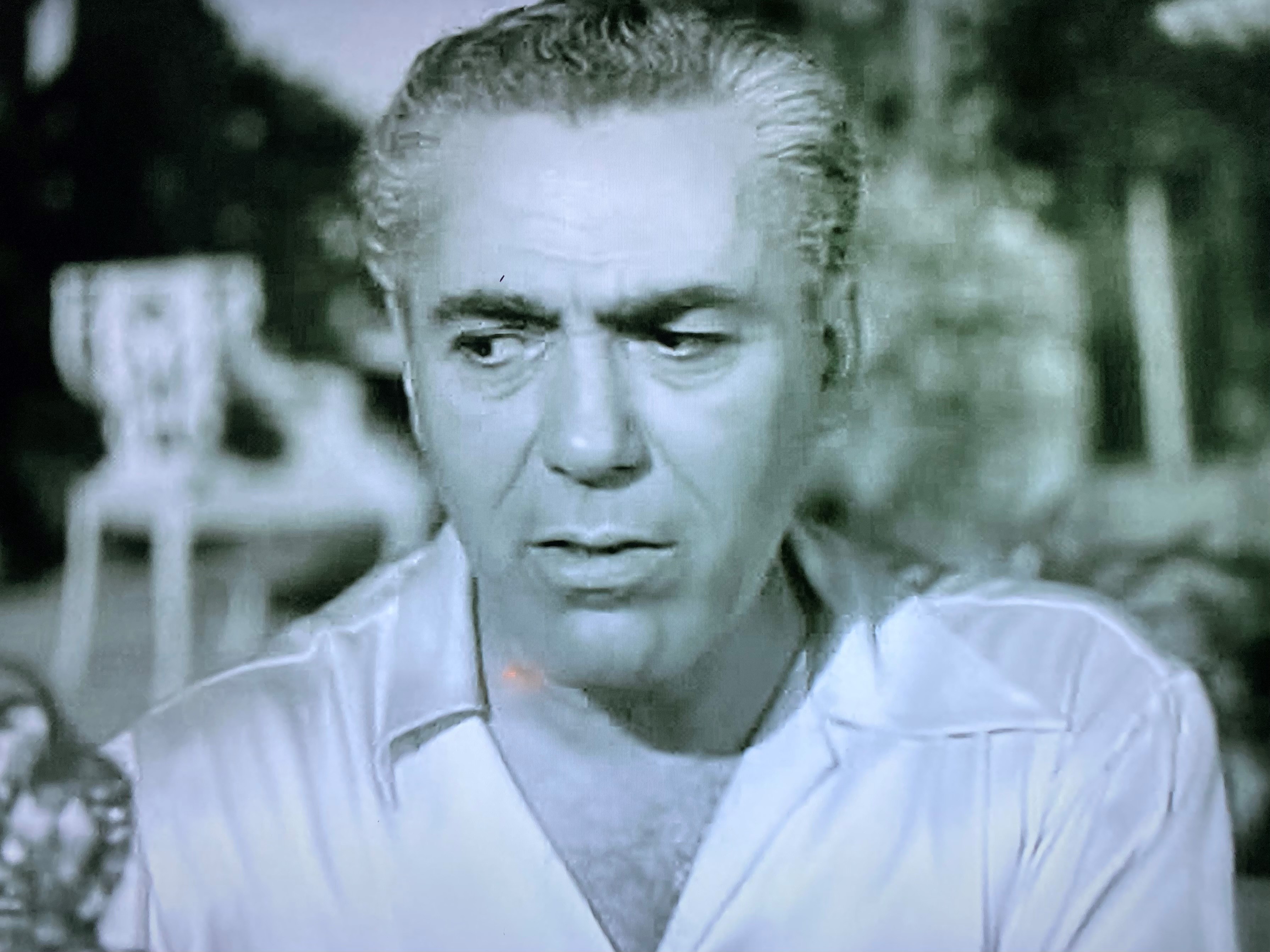


Steve would likely sniff out the trap if he questioned the patron who triggered Amy's sudden departure, since it appears the customer really has no connection to the American beauty.  It appears that Steve's cool is being melted by desperation and loneliness (again, paralleling Boyer rather than Bogart) but on the whole all motivations (save Gireaux') are nowhere near as delineated as in Prey of the Cat.  Does Steve have a death wish?  He might--after all, was it inexperience that had his dealers pulling the wool over his eyes or distraction?  Corbett gives the impression of being grateful for Bret's help, which would seem to indicate his life still has meaning to him.  Corbett's closing line also rings a little false: stating he didn't want to die in Mexico hints of a longing for the U.S.A.  It's another clear homage, as Bogart's Rick fought for the losing side of the Spanish Civil War.  But Corbett smuggled services for the losing side of the U.S. Civil War for a Confederacy that no longer exists, so that parallel doesn't translate so smoothly.  
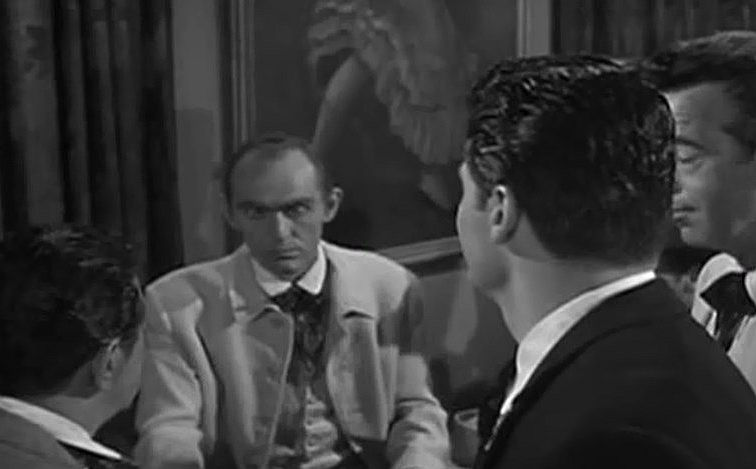


Mohr's the focus here but actually had a better showcase in You Can't Beat the Percentage a season later, an episode more faithful to the MAVERICK universe than this one.  Escape to Tampico isn't terrible, just a couple of steps down from Heyes' usual contributions--it could have been an episode of just about any straight-faced Western of the period.  For MAVERICK or for Douglas Heyes that's a letdown.  Hey, nobody's perfect. 


HOW'D BRET DO AT POKER?

Disastrously.  He lost $2,311 at the tables on his Riverboat trip from Memphis to New Orleans (plus the $47 he spent on the trip), then the $1,000 dollar bill safety pinned in his coat at the table in The Big Easy.

BOTTOM LINE:

It's a close race between Hargrove and Heyes as to who had the better MAVERICK track record.  Heyes had success with several atypical installments, but the reduced emphasis on Bret and uncharacteristic lack of clarity makes Escape to Tampico the weakest of his second season contributions.  Not terrible but in the end unsatisfying.  In a landmark season, average looks worse than it is.  Still worth a look for the typically strong contribution from Gerald Mohr and even more references to the cinema classics above than I listed--it'll take more than one viewing to catch them all.  (**1/2 out of four)

 
MAVERICK currently airs at 5 A.M. Central on Heroes and Icons (Dish Channel 293) and 9 A.M. Saturdays on MeTV (Dish Channel 55).

Monday, September 13, 2021

MAVERICK Mondays: "A Flock of Trouble" (1960)


MAVERICK Mondays: 
Number 31


MAVERICK: "A Flock of Trouble" (Warner Brothers/ABC-TV 1960) Original Air Date: February 14, 1960.  Starring James Garner as Bret Maverick, Myrna Fahey as Dee Cooper, Merritt Bohn as Big Coley, George Wallace as Verne Scott, Tim Graham as Jensen, Armand Alzamora as DeBasco, Donnelly Rhodes as Cain, Chet Stratton as Crabhill, Irving Bacon as McFadden.  Written by Jim Barnett, Ron Bishop and Wells Root.  Directed by Arthur Lubin. 


When his three Kings bests Big Coley's trip Queens during an impromptu poker game while their stagecoach is delayed, Bret Maverick finds himself the owner of "three thousand head" in lieu of the considerable cash he's just taken from Coley.  As was the case in Relic of Fort Tejon, Bret has misunderstood the loser: upon arriving at his new ranch, he finds himself the proud owner of 3,000 sheep, not cattle.  


And since Bret's new spread is right in the heart of cattle country, he finds himself inheriting a range war to go with the acreage.  The cattlemen, headed by Scott, are hankering to meet up with this "new owner Maverick", so Bret alertly introduces himself as Gordon W. Howitzer, range inspector from Washington, D.C.  Scott is immediately suspicious of this "federal man" who smells of sheep, but "Gordon" makes a needed ally in the richest owner of the bunch--Ms. Cooper.  Since she's Scott's intended, Howitzer has his wary eye at all times but reinforces the bond by treating the tomboyish Dee like a lady.


A Flock of Trouble is easily the best of three teleplays from the team of Ron Bishop and Wells Root (The  Maverick Line).  Lifting the premise from THE SHEEPMAN and working from a story by F TROOP co-creator Jim Barnett, the duo strikes the right balance this time, as Bret Maverick again wins a poker prize that might well be more Trouble than it's worth.  After belatedly realizing he's been sold a bill of goods, Bret deftly charms the one cattle owner who can save his neck by reading her correctly: underneath that tomboy is a beautiful young woman eager to let her feminine side shine.


Dee's no-nonsense if not tough exterior (instilled by her father, who wanted a boy) melts considerably once Bret charms her with poetry and a dress, but Maverick's charm only hardens Verne Scott's deep distrust.  No points for figuring that Scott has an ulterior motive to "merge" with Cooper's considerable spread, but despite this predictable twist A Flock of Trouble stays lean and amusing throughout.


As in the aforementioned Relic of Fort Tejon, Bret gets to deal with a scene stealing animal--in this case, a sheepdog named Heather.  In fact, the funniest scene involves Bret sweating being outed by the adoring canine in a cantina full of disapproving cattlemen. 


The unfortunately unsung Myrna Fahey was usually relegated to bland "good girl" roles and barely more than a bit player in Duel at Sundown.  She got her best MAVERICK role here and made the most of it, looking revelatory in her new dress.  Dee might seem a little too willing to buy Howitzer's line, but one can see how she'd crave the gentlemanly attention to that point: intended Wallace is too cold (basically treating her like one of the boys) and everyone else is way too intimidated by him to provide any competition.  


Director Arthur Lubin loomed largest in season three, with 9 of his 11 episodes coming in this batch. Originally airing on Valentine's Day, A Flock of Trouble doesn't quite reach the heights of his classic Maverick and Juliet (arguably the season's very best) but is a vast improvement for director and writers from their prior collaboration, the too-silly Cats of Paradise.   With "Seward's Folly" in Alaska figuring prominently in the plot, this one almost certainly takes place in 1867.  


HOW'D BRET DO AT POKER?

What should have been a hefty win ended up being muted by a typical Maverick misunderstanding on property taken in lieu of cash. Still, Bret's ending net was roughly $500, since he was into the game for $1,000 by his own estimate, and he received $1,500 for his 3,000 head of sheep.  Far short of his anticipated $36,000 windfall, and took a considerable amount of grief to get, but as any poker player understands, a profit is a profit.

WISDOM FROM PAPPY?

"Lightning can strike twice in the same place."  This was the Wise One's initial reaction to the birth of son Bart, according to Bret.


THE BOTTOM LINE:

A pretty lady gets Bret in a bit of trouble with a corrupt insider, after Bret fails to vet a poker foe's substitution for a lost stake.  I know, stop me if you've heard it.  But isn't that everything one expects from MAVERICK?  Delivered in a tight script from Bishop, Root and Barnett, A Flock of Trouble would make a solid addition to any season.  Not quite top tier but not too far from it, with lots of amusement if few surprises and a choice role for an overlooked starlet who died way too young (Fahey was 40 when she passed away in 1973).  (***1/2 out of four)

MAVERICK airs every Saturday morning at 9 A.M. Central Time on MeTV, and every weekday morning at 5 A.M. Central Time on Heroes and Icons. 

Monday, July 20, 2020

MAVERICK Mondays: "Two Tickets to Ten Strike" (1959)


MAVERICK Mondays: Number 29


MAVERICK: "Two Tickets to Ten Strike" (ABC-TV/Warner Brothers 1959)  Original Air Date: March 15, 1959.  Starring James Garner as Bret Maverick, Connie Stevens as Frankie French, Andrea King as Mae Miller, Lyle Talbot as Martin Scott, William D. Gordon as Eddie Burke, Adam West as Vic Nolan, Roscoe Ates as Joe the Barber.  Written and Directed by Douglas Heyes.


During the long stage ride to Ten Strike, New Mexico from Tucson, Bret Maverick makes the acquaintance of dance hall girl French.  He does so with reluctance, but finds the effervescent young lady hard to shake.  With only one hotel in town, Maverick is gentlemanly in spite of himself: Bret ends up moving Frankie's considerable baggage and losing a much anticipated hot bath to the showgirl.


Maverick also finds himself unwelcome in Ten Strike: Nolan and Burke strongly advise him to be on the next stage the morning after his arrival.  Later, they drive the point home physically.  Frankie gets a far warmer greeting.  In fact, she's been summoned to the New Mexico town for her "everlasting benefit" by a mysterious benefactor.  She's flattered, but increasingly smitten with Maverick, who wonders just who wants him out of town.  And why.

Douglas Heyes' penultimate MAVERICK begins as light comedy, with the ever put-upon Bret finding himself constantly intertwined with French long beyond their shared stagecoach ride.  True to form, he makes her pay for the stolen bath but allows himself to be guilted into sharing his meal after it breaks her.  The contrast between perky Frankie and laconic (at least until he's had his coffee) Bret allows for plenty of quick bantering punctuated by Maverick's repeated denials of romantic interest.


"My Pappy told me there's just about three reasons most men do anything: Greed, Curiosity and Anger."

Frankie is intrigued more by Bret's character than her secret admirer's (presumed) money, and Maverick's failure to heed the friendly warning has her thinking the feeling is mutual.  Nope: it's Pappy's first option that keeps his son past curfew: Bret outstays the stage at Ten Strike's poker tables.  The session is far from profitable, but Pappy knew his offspring well.


"Pappy said most men, but he was looking right at me when he said it".

A considerable amount of MAVERICK's appeal stems from watching that greed in action, but it was always overstated in comparison with Bret's curiosity, which gets him into more hopeless (but not serious) situations that he'd care to admit.  Upon arrival, Maverick doesn't expect a lengthy stay in the titular town, but sure enough, Pappy's second reason keeps Bret there for the rest of Two Tickets to Ten Strike.


"I bought some hats!  I always buy hats when I'm confused."
"I believe it.  I've seen some of 'em."

Pappy didn't mention "love" as one of his three reasons, and while Bret never appears to fall for Frankie, the daffy damsel certainly grows on him.  Maverick ends up kissing her three different times, and actually leaves a poker table when he hears she's been jailed!  For once, it appears that Bret's resistance to matrimony might well be futile!  In the end, though, Stevens and French were both one and done in the MAVERICK universe despite this auspicious debut.  You can probably thank her long-running HAWAIIAN EYE berth (which began just a few months later) for that--she's one of Bret's very best leading ladies.


Stevens has formidable competition in the vavavoom department from the always photogenic Andrea King, beginning to make the rounds at Warner Brothers television after a healthy run in features.  King scored multiple appearances on 77 SUNSET STRIP and THE ALASKANS, but despite her memorable turn here as the proprietress with a past, this was her only MAVERICK.  Too bad--you can't take your eyes off her.

West and Gordon
Two Tickets to Ten Strike is the first of three episodes for Adam West, who would return in Pappy and A Fellow's Brother during the third season.  And since it's a Douglas Heyes Joint, future screenwriter William D. Gordon is here, too, as West's partner in crime.  A poker dealer in both Escape to Tampico and (uncredited) Two Beggars on Horseback, Gordon would end up writing and producing for IRONSIDE and TWELVE O'CLOCK HIGH among others.  This was the last of his four segments; Gordon's most substantial MAVERICK role was that of a suspicious ranch hand turned would-be vigilante leader in Heyes' frightening Prey of the Cat.


HOW'D BRET DO AT POKER?

He lost $200 learning how the game is played in Ten Strike, and was preoccupied the rest of the time.  Even when he belatedly made his way out of town, he got dragged away from his next game when a stranger piqued his curiosity.  Speaking of that....

WISDOM FROM PAPPY?

The first proverb from the Maverick patriarch is discussed above, but we get another dose later, and  the second Pappyism is my personal favorite of the entire series: "A coward dies a thousand deaths.  A brave man only once.  A thousand to one is a pretty good advantage."

THE BOTTOM LINE:

Not quite on a par with Two Beggars on Horseback, but a solidly drawn addition to the eclectic mix Heyes contributed to MAVERICK's finest season.  Two Tickets to Ten Strike bookends a plot-heavy middle with as close as the show got to classic screwball comedy.  On the downside, the repartee between Garner and Stevens is missed when disappearing for the intrigue.  But there's much more to savor: Roscoe Ates' deadpan cameo, an atypically sympathetic role from LOVE THAT BOB "wolf" Lyle Talbot.  Best of all, two of Pappy's quintessential aphorisms are present and illustrated perfectly by the action that ensues.    (***1/2 out of four)


MAVERICK airs every Saturday morning on MeTV at 9 A.M. Central, and every weekday afternoon on Encore Westerns at 3:35 P.M. Central.

Monday, December 16, 2019

MAVERICK Mondays: "The Sheriff of Duck 'n' Shoot" (1959)


MAVERICK Mondays: Number 28


MAVERICK: "The Sheriff of Duck 'n' Shoot" (1959 ABC-TV/Warner Brothers) Original Air Date: September 27, 1959.  Starring James Garner as Bret Maverick, Jack Kelly as Bart Maverick, Peggy McCay as Missy Maybrook, Chubby Johnson as Deputy Billy Waker, Jack Mather as Judge Hardy, Donald "Red" Barry as Fred Leslie, James Gavin as Buck Danton, Hal Baylor as Bimbo, Irving Bacon as Andrews, Billy Greene as Herman, Richard Cuttling as Smitty, Fred Aldrich as Ferguson.  Written by William Driskill.  Directed by george waGGner.  


Getting up to cash in his poker winnings in the titular township's (population 1,018) saloon, Bret gets credit for the inadvertent result of an agitated horse's kick: the subduing of town bully Ferguson.  That makes him the closest candidate the unfortunate city has to replace the recently departed sheriff, with a little bit of blackmail--the impounding of Bret's winnings--inducing a six month appointment.


Maverick's first day on the job starts inauspiciously: he learns he's the twenty-third sheriff that his new deputy has worked for, and Bimbo Ferguson is determined to wreck Duck n' Shoot as vengeance for his brother's incarceration.  On the other hand, newcomer Melissa ("Call me Missy") Maybrook wants to make the sheriff's acquaintance, so it isn't all bad...or is it?  She's also secretly partnering with Danton and Leslie, well known bank robbers who will be the novice lawman's next challenge.


"I'm unreliable.  I'm a terrible shot.  And this I mean most sincerely--I have been for as long as I can remember--a coward."

Despite the shortcomings that Bret modestly details, he turns out to be the most successful lawman in the history of Duck 'n' Shoot.  (At least, for a month--more on that below.)  Yes, the disabling of Frank was nothing more than dumb luck, but that was before Bret had the badge.  Reluctantly pinning it on and trying to hide it as he does, Maverick nevertheless deserves full credit for the vast reduction in crime on his watch.  The methods are all his.


When Bimbo arrives to test out the new Sheriff by trashing the town, Bret gambles with him--winning a day's incarceration with three nines to the junior Ferguson's two pair.   When a fight breaks out in the saloon, Bret wins money on it--which disgusts the participants into peace.  Interestingly, Bret subtly cheats on both occasions, something he'd never do (he never has to) while he's at the poker table.  Tellingly, Maverick only feels guilty about his deception with the deck.  ("Forgive me, Mr. Hoyle" he says with raised eyes.  Begging God's forgiveness?)


One can't fully blame Bret Maverick for keeping such income supplements with a salary of $84 a month keeping him away from a poker table that netted him nearly sixty times that in a day.  (I counted $260 in brawl-related winnings, myself.)   The Judge admits that Bret is earning every penny--as long as he's dealing with male criminals.  As might be expected, Bret's weakness is Missy Maybrook.  Bret doesn't completely trust her--note his relocation of the bank's funds once he thinks she's out of eyeshot--but she proves to be his Achilles heel nevertheless.  Too bad--Deputy Waker might well have put Bret's picture on the wall alongside Pat Garrett's if he'd kept that early momentum going.

"Then throw in nine more 'helps'." 

As he had in Shady Deal at Sunny Acres, Bart comes to his brother's aid capably.  Naturally, it is strongly hinted that collecting a debt from Bret brings him to the titular town more than any sense of brotherly love.  Bart proves less susceptible to the winsome lass than his brother, but clearly knows they have the same limitations: the younger brother is notably leery at having to resist her for a long period of time in the coda.  Peggy McCay had one of television's longest careers (started in 1949, ended in 2017!) and would return to bedevil both Mavericks again in The Maverick Line.


The Sheriff of Duck 'n' Shoot is also an auspicious debut for both its director and writer.  George waGGner was most often behind the camera on 77 SUNSET STRIP (he helmed 41 episodes), but returned to show his serious side: he wrote and directed his next installment, the underrated You Can't Beat the Percentage.  Leonard Driskill turned out to be a one-hit wonder after this hilarious opener, at least as far as MAVERICK goes: his second and last teleplay for the series was the disappointing Trooper Maverick.  This one, though, is near-perfectly paced and very well calculated, with only Maybrook's decision to back Bart seeming slightly perfunctory.

A sly commentary on the merits of the peace officer versus the law-and-order type, The Sheriff of Duck 'n' Shoot makes that point as well as any ANDY GRIFFITH SHOW, and for my money even better than Garner's later hit SUPPORT YOUR LOCAL SHERIFF!.  Further analysis on the virtue of being a rascal while taking on other rascals is pure MAVERICK--and pure fun from start to finish.  Another one of those episodes that demonstrates what made the series special, and a surprising number of those remained even after the loss of series creator Roy Huggins.


HOW'D BRET DO AT POKER?

$5,000 in winnings for Bret that the judge is holding in escrow.  Not too shabby, but actually pales in comparison to the success enjoyed by our crooks at the table: Leslie pockets $8,000 and Danton a whopping $12,000 respectively on the night they were supposed to be robbing the bank!  Who needs criminal activity?  And if the locals are that loaded and that terrible at the table, why isn't Duck 'n' Shoot a regular stop on the Maverick Poker Tour?

WISDOM FROM PAPPY?

Driskell gives us more Pappyisms than I can recall in any other single episode: five.

"The worst crime a man can commit is to interrupt a poker game."  Very true, Beauregard.

"If you know a man's weakness, you know the way to his heart."  The Judge is convinced of Pappy's intelligence with this one.

"Try everything once, and if you don't succeed, then become a lawman."  One of Pappy's truest proverbs?  Bret and Bart both tried to follow it.

"The next best thing to money is a man's name on the dotted line."  However, Bart was quickly contradicted by brother Bret on this one, who recalled Pappy saying:

"Sign nothing."  Indeed, the wise one was prone to contradict himself from time to time.

Driskell must have been tapped out, since Pappy had nothing further to offer in Trooper Maverick.


THE BOTTOM LINE:

Three episodes into his stint as producer, Coles Trapnell shows that he has the juice to keep MAVERICK as subversive as before.  Both brothers take a turn in the Sheriff's office and demonstrate that brains can triumph over brawn in that profession, too.  As long as the big head does the thinking for the little head, anyway.  The Sheriff of Duck 'n' Shoot arguably bests even SUPPORT YOUR LOCAL SHERIFF!, going light on the silliness once the far-fetched knockout of Ferguson is out of the way.  With just the right amount of time taken to get to its twists and effective brotherly one-upmanship at its most concise, this is among the season's best.  (**** out of four)  


MAVERICK airs Monday through Friday commercial-free at 3:10 P.M. Central on Encore Westerns, and every Saturday morning at 9 A.M. on MeTV.


Monday, June 10, 2019

MAVERICK Mondays: "A Fellow's Brother" (1959)


MAVERICK Mondays: Number 26


MAVERICK: "A Fellow's Brother" (1959 ABC-TV/Warner Brothers) Starring James Garner as Bret Maverick, Jack Kelly as Bart Maverick, Gary Vinson as Smoky Vaughn, Diane McBain as Holly Vaughn, Bing Russell as Jed Haines, Sam Buffington as Burgess, Adam West as George Henry Arnett, Wally Brown as Enoch, Jonathan Hole as Marvin, Charles Maxwell as Russ, Robert Foulk as the Sheriff, Billy Benedict as the Desk Clerk.  Written by Herman Epstein.  Directed by Les Goodwins.


The feared George Henry Arnett abruptly abandons a showdown with young Smoky Vaughn when he hears that Bret Maverick is looking for him--which convinces an idolizing Smoky that Bret is a feared gunslinger.  Eagerly becoming Bret's unwanted sidekick, the kid isn't deterred when his new "pal" insists--truthfully--that Arnett ran quickly to avoid paying an old monetary debt.


Bret's attempt to shake this newfound and mistaken reputation isn't helped by the arrival of bounty hunting Burgess, who insists that Maverick is the killer he's after.  While the impatient Smoky attempts to help his unwilling idol break out of jail, Bret has more trouble on the way: Haines, the brother of the man that "Maverick" allegedly killed.  Knowing that brother Bart is nowhere near Canyon City, Bret asserts mistaken identity, implies that they're after his brother, and sends Burgess (and by extension, the corrupt Sheriff) looking in that direction.   Meanwhile, Smoky repeatedly assures Mr. Maverick that he has his back as the Haines posse closes in.


SMOKY: "You wouldn't shoot anyone in the back!"
BRET: "It's the safest place."

Always the most reluctant of all possible heroes, Bret Maverick is more disinclined than ever in the face of Smoky's misguided reverence.  Ironically, sister Holly Vaughn is right--Bret would be a very positive influence on the aspiring young gunman.  Smoky's odds of ever growing old seem long from the get-go, since he's willing and able to put his life on the line over a mud splash when we first meet him.  Not something the ever-prudent Bret would allow to escalate.


"When a fellow's brother gets killed, it's up to the fellow's brother to get the fellow who killed the fellow's brother."

Everyone seems to believe this imperative, except pragmatic Bret.  Upon hearing that brother Bart has been gunned down, Bret's response is immediate and decisive: he's going out for breakfast.  Later we receive further clarity on the younger Maverick's location and the impossibility that this "report" could be true.  If it were, though, Bret's reaction later tells us what he thinks of this unwritten rule--he sends the bounty hunter looking for his brother!  After all, that's his problem.


HOLLY: "Stupid, silly pride. A man is coming here to kill you.  Why must you stay here and face him?"
BRET: "Who's staying???"

In the same year that Howard Hawks made RIO BRAVO, Herman Epstein (Maverick and Juliet) came up with MAVERICK's own subtle, cheeky response to HIGH NOON.  Diane McBain (SURFSIDE 6) is our answer to Grace Kelly here (AFAIC not a bad tradeoff at all), looking out in horror from behind windows and getting the lengthy anti-Code speech--which Maverick, of course, promptly agrees with.  Bret doesn't channel Gary Cooper, hiding inside the house until Smoky foils those plans.


Suggesting that it is Smoky, not Bret, who is more isolated in this idolatry of honor, Jeb Haines slowly, menacingly approaches Bret Maverick--and promptly concludes that he has the wrong man.  Haines later picks a much more winnable gunfight and proves to be at least as cash-motivated as any Maverick.  The latter also applies to Burgess and the Sheriff.  So much for nobility.


Few actors have ever been able to play put-upon annoyance like James Garner, and Gary Vinson's wonderfully earnest comedic performance brings it out, providing this show's highlight.  This was the only MAVERICK for Vinson (McHALE'S NAVY), who sadly committed suicide in 1984 at age 47.

Sam Buffington and Garner
Sam Buffington, another talented actor who died way too young by the same method just a year later (he was only 28) marks his fifth and final MAVERICK as the humorless bounty hunter.  Adam West (Pappy) also appears for a third and final segment as the feared (and fearing) gunslinger in the opening minutes.

MAVERICK's third season can't quite measure up to the legendary second, but A Fellow's Brother doesn't contribute to that particular failing.  In fact, I'd say it is a more successful skewering of heroic obligations than that season's much better known The Saga of Waco Williams.  Truer to the show's universe from fade-in to fade-out, with nary a wasted line.


HOW'D BRET DO AT POKER?

He appeared to be doing rather well at the local saloon despite the distraction; the one activity Smoky wasn't able to affect in a negative way.  Bart only appears in the closing seconds, and from the looks of things, won't be making it to the tables anytime soon.


WISDOM FROM PAPPY?

"It isn't how fast you draw that counts--it's what you draw and when you draw."  Yep, Pappy was talking about guns versus poker.  Succinct.


Herman Epstein is one of the unsung MAVERICK heroes, providing two of the third season's top 4 installments and two more good ones during the wildly inconsistent fourth.  A Fellow's Brother was also the first (and best) of seven segments for venerable Leslie Goodwins (The Maverick Line), who guides a sensational comic performance from Vinson, so sincere and yet so unintentionally grating--in a good way.  With all the mentions he receives throughout, it's thoroughly predictable when brother Bart shows up for the capper, which works as admirably as everything else preceding it.  (**** out of four)


MAVERICK airs Monday through Friday at 3:10 P.M. Central Time on Encore Westerns, and at 9 A.M. Central Time every Saturday on MeTV.


Monday, December 24, 2018

MAVERICK Mondays: "The Maverick Line" (1960)


MAVERICK Mondays: Number 24


MAVERICK: "The Maverick Line" (1960 ABC-TV/Warner Brothers) Original Air Date: November 20, 1960.  Starring James Garner as Bret Maverick, Jack Kelly as Bart Maverick, Buddy Ebsen as Rumsey Plumb, Peggy McCay as Polly Goodin, Will Wright as Atherton Flayger, Charles Fredericks as Shotgun Sparks, Chubby Johnson as Dutch, Charles Alvin Bell as Bandy, Alan Reynolds as Phineas Cox.  Written by Ron Bishop and Wells Root.  Directed by Les Goodwins.


Bret and Bart take the titular stagecoach to Snowflake to claim their inheritance from Uncle Micah Maverick.  The journey is interrupted by highwayman Rumsey Plumb, who is more saddened by the brothers' disinterest in continuing the business than in the empty lockbox.  While let down, Rumsey isn't as disappointed as the Mavericks soon will be.


Once the brothers arrive at attorney Atherton Flaygur's office, they learn that the Maverick Line is all they've received in the will--"to install regards for commerce and to repel traits of idleness and shiftlessness" in accordance with Micah's wishes.  Bret and Bart rush for the door, only to be stopped by Polly Goodin, heir to the land that Micah purchased right of way from.  She'd like it back, so there's potential for a substantial profit in the rickety old stage line after all.  Enough of one to put the lives of both Mavericks in danger when Flaygur learns that a "tragic misfortune" befalling them both would revert ownership of the Line to the will's executor.


The Maverick Line posthumously introduces us to the boys' Uncle Micah.  After all we've learned about Bret, Bart, Beau, Pappy and Uncle Bentley, Micah is the Bizarro Maverick: strongly disapproving of gambling and a wayward existence while championing hard work.  Forget Beau and his (accidental) Civil War medal--Micah was the true white sheep of the family.  Little wonder that Pappy Beauregard and brother Bentley have no bequeathment from him--obviously, Micah thought only the young 'uns were salvageable.


"Any man who needs to make a will isn't spending his money properly." -- Pappy (One of Our Trains is Missing)

For all of his will's verbiage extolling of the value of hard work, the evidence we're shown calls that virtue into question, along with Uncle Micah's business acumen.  Parsimonious Micah's decrepit stage has two horses (both looking ready for the glue factory) instead of the usual four, he paid meager wages that attracted less than committed employees like Dutch, and he was too miserly to even hire a shotgun to back up his driver.  The last of these "qualities" enables Rumsey Plumb to make a consistent living--even with a lockbox that's often empty.  Giving him the benefit of a doubt, Micah appears to have died without much to show for all that work ethic, so he might have been cheap out of necessity.  Suffice to say that reading between the (Maverick) lines fully supports Pappy's philosophy of life over his penny-pinching brother's.


Intended as the fourth season's premiere but delayed until November due to James Garner's departure, The Maverick Line would have been the weakest opener to date by a considerable margin.  While the Mavericks have a spotty history at best in business deals away from the poker tables, they always seem several steps further behind Goodin and Flaygur than they should be.  You'd think that all the interest in their right-of-way (including a land rush filled with nagging questions) would have told at least one of the brothers to hold instead of fold.


The contrivances to get to the denouement are much more noticeable than before.  A really glaring example is Plumb's second lockbox procurement: after it has been established that he always has the driver hold it while he shoots the lock off, Rumsey takes the box after accosting Bret and Polly en route and sends them on their way.  Why?  So he can conveniently set off the bomb inside it seconds later without killing the show's stars.  At least, that's the only explanation that fits--certainly no logical progression based on the story up to that point.  (If he'd known that it would be Garner's finale when The Maverick Line was filmed in March 1960, Jack Warner might have signed off on that detonation in Bret's hands---but I digress.)


"Just clearing my conscience.  Hard to explain to a man in your kind of work." --Shotgun Sparks, to probate lawyer Atherton Flaygur.

Root and Bishop do have several funny lines in the script, saving their tastiest for Buddy Ebsen's Rumsey Plumb, who is the best written character by a wide margin.  Self-sufficient, hard working, but thoroughly professional, he's a hoot in his game attempts to preserve his steadiest source of income.  Plumb draws a distinct line between Sparks and himself, generously provides his horse at a key moment without hesitation, and has the Mavericks "over" for quail dinner when all is said and done.  Chubby Johnson (Pappy) grouses as yet another comical stagecoach driver, and Will Wright (Rope of Cards) also returns to the series, channeling his best Charles Lane.  Atypically strange and ultimately unsatisfyingly so, The Maverick Line is more evidence of a show in decline than a stage setter.  It is likely overrated due to its accidental status as Garner's farewell.


HOW'D THEY DO AT POKER?

No table action at all for Bret or Bart.  I said it was atypical.

WISDOM FROM PAPPY?

Nope, none at all, and you'd think he'd have had something to say about dear estranged brother Micah.  Before I checked the credits, I occasionally wondered if the writers had ever seen MAVERICK before.  But they had.....


THE BOTTOM LINE:

...among the writers brought aboard by Coles Trapnell for the third season, Wells Root and Ron Bishop partnered on two installments previously.  They typically worked as a team, but each had one solo outing for the fourth season.  It's very MAVERICK-like to have highwaymen, professional gamblers and even the fixer Sparks having far more honor than the bankers and financiers we meet.  Not so much to have both brothers so outwitted simultaneously, or for the story have such transparent contrivances.  The Maverick Line has a number of witty lines and Goodwins presents them nicely, but the decline in the writing without the original contributors from the first two seasons is palpable by this time.  Some really funny moments from Ebsen, but ultimately a disappointing swan song for James Garner.  For my money, the weakest Bret-Bart teaming.  (** out of four)


MAVERICK airs Monday through Friday without commercial interruption at 2:35 P.M. Central Time on Encore Westerns, and every Saturday morning at 9 A.M. Central Time on MeTV.